How to Deal With Burnout Without Taking a Break (A No-Leave Recovery Plan)
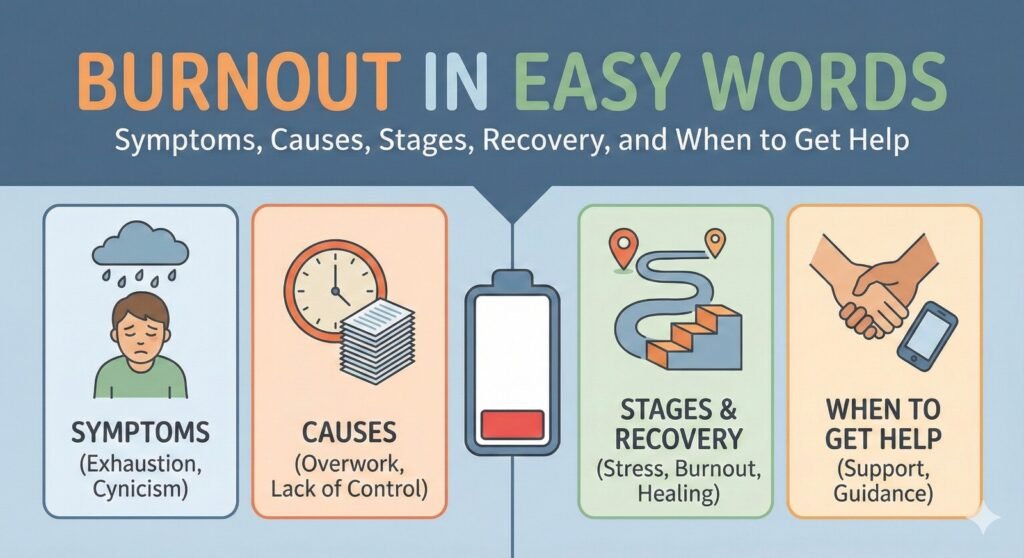
Burnout isn’t just “tired.” It’s what happens when stress stays on long enough that your body and brain stop recovering. The World Health Organization describes burnout as chronic workplace stress that hasn’t been successfully managed, showing up as exhaustion, mental distance or cynicism, and reduced professional efficacy.
And yeah, sometimes you can’t take leave. Bills exist. Deadlines exist. Responsibilities exist. This isn’t a “take a month off and find yourself” plan. This is the No-Leave Plan: small moves that reduce the damage now and make relapse harder later. Even if you’re not in a typical office role, the same principles apply: reduce demand, protect recovery, and redesign the system.
The Goal of the No-Leave Plan
You’re aiming for three wins:
- Reduce active energy drains (the stuff currently wrecking you).
- Protect recovery (sleep, food, movement, mental decompression).
- Change the system (so this doesn’t repeat next month).
Step 1: Triage Today
Burnout makes everything feel urgent. That’s how it traps you.
Build a “Minimum Viable Day”
Write two lists:
- Must do today: 1–3 items that keep your job/life from catching fire.
- Should do today: everything else.
Do the “must” list first. When your brain is cooked, extra effort isn’t noble. It’s expensive.
Cut one hidden workload for 24 hours
Hidden workload is the quiet killer:
- Constant Slack/WhatsApp checking
- Over-explaining in emails
- Extra meetings “just in case”
- Perfection edits no one asked for
Pick one and shut it down for a day. Your output usually drops far less than your stress.
Use a shutdown ritual (10–15 minutes)
At the end of work:
- Write tomorrow’s top 3
- Park open loops in a note
- Close the day
This reduces late-night rumination and helps sleep stop being a wrestling match.
Step 2: Micro-Recovery Blocks
Burnout eats free time. So you recover in small protected slots, not one mythical two-hour routine.
The 5–5–5 reset (3x/day)
- 5 min: stand up, stretch, water
- 5 min: outside air or sunlight if possible
- 5 min: slow breathing or quiet sitting
You can turn this into a simple table in WordPress if you want, but the point is repetition, not aesthetics.
Transition breaks (60 seconds)
Before switching tasks:
- Breathe
- Name the next task in one sentence
It sounds silly until you notice how much it reduces that frantic “I’m working but nothing is moving” feeling.
Step 3: Dial Down Demands
You may not be able to change the job today, but you can change how much of it you absorb.
Shrink the surface area
- Mute non-urgent notifications
- Check email in blocks (example: 2–3 times/day)
- Reply shorter unless the stakes are real
Kill one commitment this week
Pick one optional responsibility and remove it:
- A recurring meeting you don’t need
- A side project you volunteered for
- A “team player” extra that silently steals your evenings
This isn’t selfish. This is survival math.
Step 4: Lock in Sleep as a Work Requirement
Burnout sleep is often “exhausted but wired.” Start small:
- Same wake time most days
- Caffeine cutoff (even 6–8 hours before bed helps)
- Phone away for the last 20 minutes
Sleep is your system reboot. Without it, every other plan becomes harder.
Step 5: The Priority Script (boundaries without oversharing)
You don’t have to declare “I’m burned out” if it’s unsafe. Use clarity.
- “I can deliver A or B this week, not both. Which is priority?”
- “If we want this by Friday, I’ll need to drop X.”
- “I can take this on, but I’ll need scope reduced to Y.”
Vague expectations fuel burnout. Specific trade-offs reduce it.
Step 6: Break the Cycle (redesign, don’t retry)
Burnout often comes from repeated mismatches. Here are the common ones in plain English:
- Load: too much, too long
- Control: no say in priorities or timelines
- Reward: effort doesn’t match recognition or payoff
- Community: isolation, conflict, poor support
- Fairness: inconsistent rules, favoritism, moving goalposts
- Values: you’re asked to do work that fights your ethics or identity
Pick one mismatch and fix one tiny lever:
- Weekly planning block
- Meeting cap
- Response-time boundary
- Scope check-in every Monday
Track one metric
Rate your energy 1–10 each week. If it trends up over 3–4 weeks, you’re redesigning correctly.
When to Get Help
If you have thoughts of self-harm, feel unsafe, or can’t function, get urgent help immediately. In the U.S., you can contact 988. If you’re outside the U.S., use your local emergency number or crisis line.
FAQ
Will this fix burnout overnight?
No. This is stabilization. It gives you enough ground to recover and make bigger changes.
What if my workplace steamrolls boundaries?
That’s data. If boundaries can’t exist, start planning a role change or exit like a professional, not a martyr.
Burnout or just a bad week?
Bad weeks fade in days. Burnout lingers for weeks or months and comes with that “hollowed out” pattern: exhaustion, detachment, and reduced effectiveness.
One last thing
If this helped, share it with someone who’s quietly running on fumes. And if you want more practical guides like this, subscribe to the site updates.