Burnout Treatment: What Actually Helps (And What Usually Doesn’t)
Burnout isn’t something you “fix” in a weekend. It’s not a motivation problem, and it’s not a personal failure. It’s what happens when strain continues long enough that your system stops recovering the way it used to.
That’s why burnout treatment feels confusing. People try the obvious things first: sleep more, take a vacation, exercise harder, get organized, push through. Some of those help briefly. Most don’t last. The symptoms return as soon as work resumes, often faster than before.
Real burnout treatment is not about optimization or self-improvement. It’s about reducing ongoing load and restoring basic cognitive and emotional function. What helps depends heavily on how far burnout has progressed and what pressures are still in place.
If you’re looking for a single cure or universal plan, you won’t find it here. What you will find is a clear explanation of what treatment actually means in burnout, what tends to help at different points, and why so much popular advice fails people who are already exhausted.
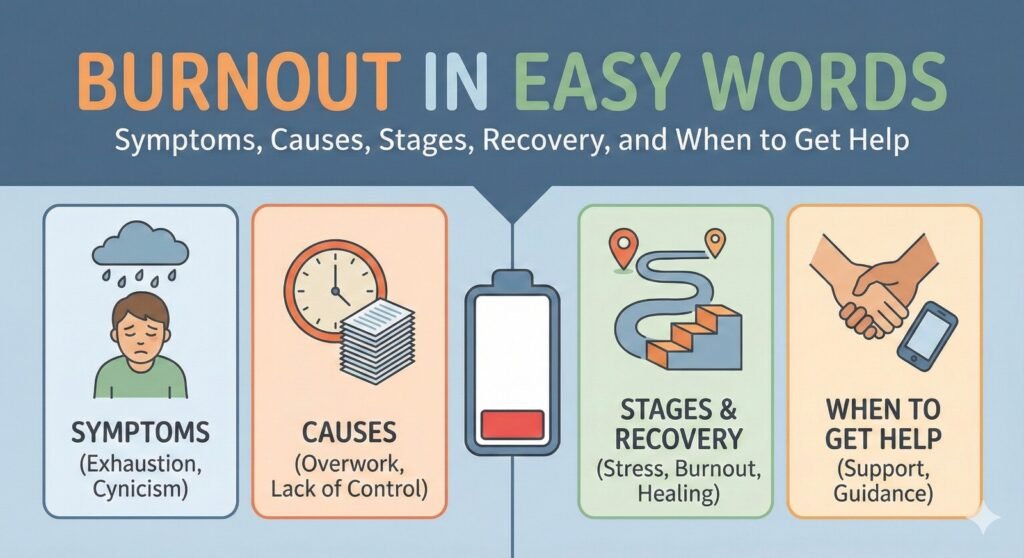
For a full explanation of burnout itself and how it develops, see Burnout in Easy Words.
First, a Reality Check About Burnout Treatment
Burnout does not respond well to surface-level fixes. That’s because the problem is rarely lack of effort or discipline. It’s prolonged strain without enough relief, control, or recovery.
This is why rest alone often fails. Time off can lower symptoms temporarily, but if the workload, expectations, or environment remain unchanged, the body quickly returns to the same state. The relief fades, and people assume they “didn’t rest properly,” when the real issue is that the source of strain never stopped.
It’s also why pushing harder backfires. In burnout, trying to compensate with more effort usually worsens symptoms. Focus degrades, emotional tolerance drops, and recovery becomes shorter each time. What once worked stops working, not because you’re weaker, but because the system is overloaded.
Finally, many productivity and wellness strategies fail because they aim to improve performance rather than restore capacity. Burnout treatment works best when the goal is stabilization first, not improvement. Until strain is reduced and recovery is real, optimization just adds pressure.
What treatment actually means in burnout
In burnout, treatment doesn’t mean curing something that’s broken. It means changing the conditions that are preventing recovery.
When people hear “treatment,” they often think of medical interventions or self-improvement routines. Burnout treatment is different. The core goal is not to perform better or feel inspired again. The goal is to stop ongoing strain from overwhelming your ability to recover and to restore basic mental and emotional function.
That usually involves two things happening at the same time:
- Reducing demands that are actively draining you
- Improving the quality of recovery so your system can reset
If only one of those changes, progress stalls. Reducing strain without recovery leaves you fragile. Resting without reducing strain leads to brief relief followed by relapse. Treatment works when both sides are addressed enough for recovery to actually stick.
This is also why burnout treatment looks different from person to person. The same symptoms can come from very different pressures. What matters is not the label, but what is still taxing your system and what is still missing from recovery.
What Tends to Help at Different Stages of Burnout
Burnout treatment is stage-dependent. Advice that helps early burnout often fails later, not because it’s wrong, but because the system’s needs have changed.
Early burnout (Overdrive / Emotional Drag)
At earlier stages, treatment is mostly about interrupting accumulation. Performance is still intact, which means small structural changes can still have a meaningful impact.
What helps here is reducing excess load before anything collapses. This might mean fewer hours, fewer simultaneous demands, or clearer limits around availability. Recovery still works at this stage, but it has to be protected. Waiting until you “feel exhausted enough” usually comes too late.
The key mistake people make here is treating early burnout as something to push through. That often accelerates progression into later stages.
Mid burnout (Cognitive strain)
Once focus, memory, and decision-making start to degrade, treatment priorities shift. The main goal becomes cognitive recovery, not productivity.
At this stage, trying to optimize performance often backfires. The system is already overloaded. Adding strategies, tools, or routines increases mental input when the problem is too much input already.
What helps here is reducing cognitive load and lowering stimulation. Fewer decisions. Fewer interruptions. Fewer information streams. Recovery needs to be quieter and more consistent, not more “efficient.”
Late burnout (Detachment / shutdown)
In later stages, self-directed fixes often aren’t enough. Disengagement and numbness are signs that the system has entered protection mode.
Treatment here usually requires external support or meaningful environmental change. That might involve professional help, extended time away from the source of strain, or renegotiating responsibilities. Small tweaks rarely create enough relief on their own.
This stage is where people often blame themselves for “not trying hard enough.” In reality, the system has already decided that disengagement is safer than continued strain.
A Critical Boundary to Understand
Burnout treatment does not mean eliminating all stress or building perfect balance. It means creating enough relief for recovery to restart.
Once recovery becomes reliable again, many symptoms begin to soften on their own. Until that happens, most advice will feel ineffective or insulting, even when it’s well-intentioned.
What sounds helpful but usually isn’t
A lot of burnout advice fails not because it’s malicious, but because it’s aimed at the wrong problem. Many popular strategies are designed to improve performance or mood in normal stress. Burnout is different.
Time off without load change is the most common example. A vacation can reduce symptoms temporarily, but if you return to the same demands, expectations, and lack of control, burnout usually comes back quickly. People often blame themselves for “not resting properly,” when the real issue is that nothing structural changed.
Exercise as a cure-all is another trap. Movement can support recovery, but when burnout is already present, exercise alone doesn’t fix it. In later stages, pushing physical intensity can even add strain when the system needs calm and predictability.
Productivity systems and optimization tools often make burnout worse. They add decisions, tracking, and pressure at a time when cognitive capacity is already reduced. What looks like “getting organized” can quietly increase mental load.
Mindset reframing and gratitude practices can be helpful in normal stress, but they often fail in burnout. When someone is already depleted, being told to “change perspective” can feel dismissive. The problem isn’t attitude. It’s sustained strain.
None of these approaches are useless in general. They’re just mismatched to burnout when used as primary treatment.
When professional help matters
Burnout doesn’t always require professional support, but there are points where outside help becomes important.
If symptoms spread beyond work and start affecting sleep, mood, or basic functioning consistently, self-directed strategies may no longer be enough. The same is true when burnout overlaps with depression or anxiety in ways that don’t ease even when work pressure is reduced.
Professional support is especially relevant when:
- Detachment or numbness persists
- Concentration problems interfere with daily life
- Coping starts to rely on substances or avoidance
- You feel stuck and unable to create relief on your own
Seeking help at this point isn’t escalation or failure. It’s recognition that the system needs support beyond willpower.
What Burnout Treatment Can and Can’t Do
Burnout treatment can restore clarity, emotional range, and the ability to recover. It can make work feel manageable again. What it cannot do is make an unsustainable situation sustainable without change.
Treatment works best when it’s honest about limits. If strain stays infinite and recovery stays constrained, progress will stall. If enough pressure lifts for recovery to restart, improvement often follows more naturally than people expect.
Where This Fits in the Bigger Picture
Burnout treatment answers one question: how to stabilize and recover once burnout is already present.
Other questions depend on this foundation:
- How long burnout lasts
- Whether it can resolve without quitting
- How to prevent relapse after recovery
Those questions only make sense once treatment is understood.
For next steps:
- If time off isn’t an option, see How to Get Over Burnout Without Taking a Break.
- For preventing relapse after recovery, see Burnout Prevention.