The Difference Between Neuroplasticity and Neurogenesis – Explained in Easy Words
Neuroplasticity and Neurogenesis In a Nutshell
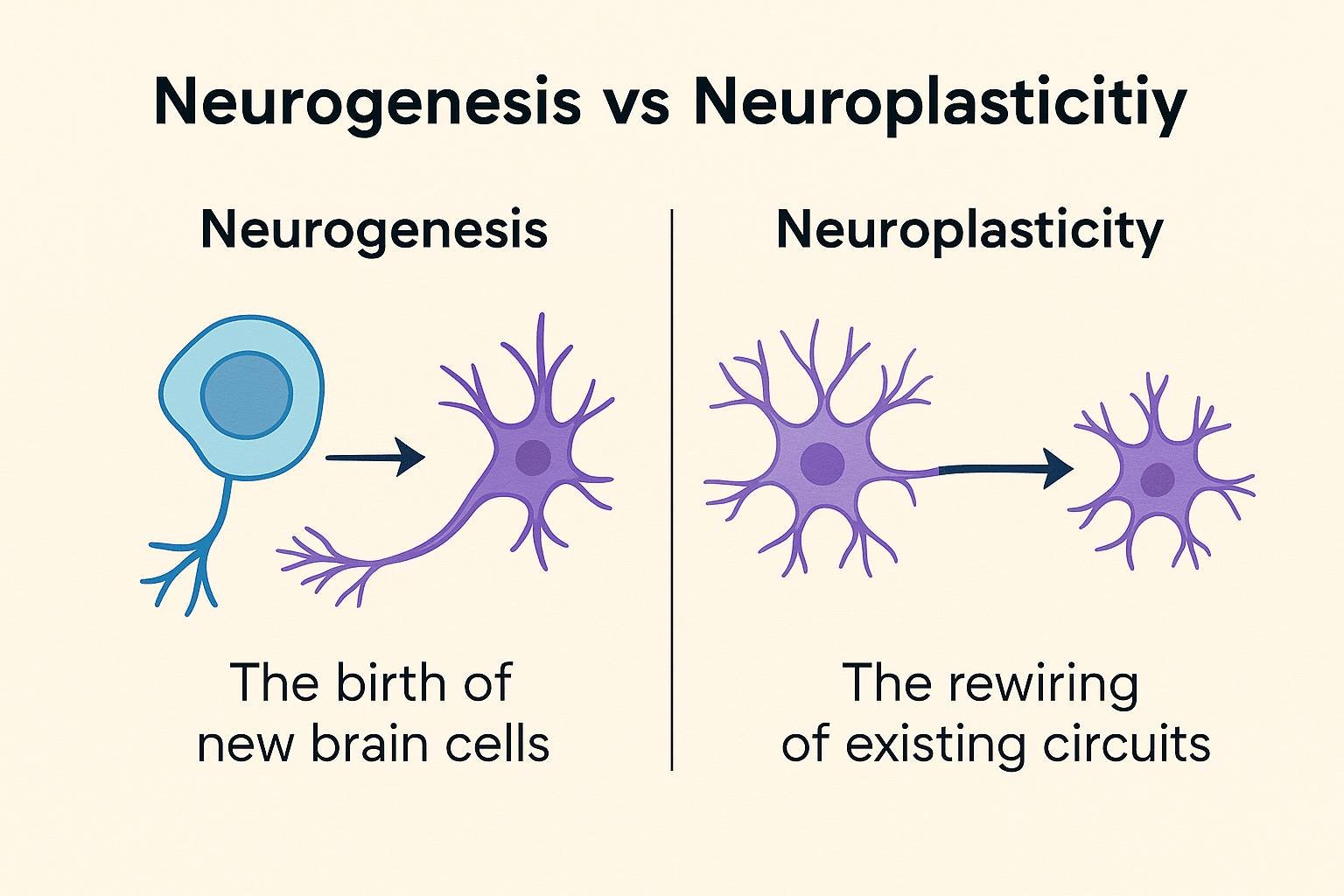
- Neuroplasticity = Your brain’s ability to reorganize and rewire existing connections.
- Neurogenesis = Your brain’s ability to grow brand-new neurons.
- Scale: Plasticity happens across the brain. Neurogenesis is limited mainly to the hippocampus and olfactory bulb.
- Lifespan: Plasticity is constant and lifelong. Neurogenesis slows significantly with age and is more fragile.
- Both are crucial — one reshapes existing circuits, the other adds fresh material.
What These Two Terms Really Mean
Neuroplasticity
Neuroplasticity is the brain’s rewiring system. It changes how neurons connect, strengthen, or weaken based on experience, learning, or recovery. You don’t grow new roads — you re-route traffic and widen or shrink existing ones. You can read our full guide on What Is Neuroplasticity and How It Works
Neurogenesis
Neurogenesis is the birth of new brain cells. Instead of rearranging roads, you’re laying down brand-new streets in specific neighbourhoods of the brain (like the hippocampus, the memory hub). For decades, scientists thought adults couldn’t grow new neurons — but research published in Neuron by Ming and Song (2011) confirmed that adult neurogenesis does occur, mainly in the hippocampus.
The Core Components
- Neuroplasticity
- Involves: Synapses (the communication connections between neurons) getting stronger or weaker.
- Found: Everywhere in the brain.
- Purpose: Adaptation — learning new skills, recovering after injury, forming habits.
- Neurogenesis
- Involves: Neural stem cells (like master builder cells) creating brand-new neurons.
- Found: Primarily in the hippocampus and olfactory bulb.
- Purpose: Supporting memory, learning, emotional regulation, and sometimes repair.
Analogy Box: The City vs. New Buildings
- Neuroplasticity = Traffic Control. Imagine a city where you widen busy highways, add shortcuts, or close unused lanes. That’s rewiring.
- Neurogenesis = Construction Crew. New houses and roads are literally being built in certain districts.
How They Work (Step by Step)
Neuroplasticity
- You practice or experience something new.
- Neurons fire together.
- Synapses strengthen or weaken (“use it or lose it”).
- Over time, circuits reorganize → habits, skills, and automatic behaviors.
Neurogenesis
- Neural stem cells divide.
- Some mature into neurons.
- These neurons migrate to specific areas (mainly hippocampus).
- They integrate into circuits → supporting memory and mood.
How Neuroplasticity and Neurogenesis Work Together
While distinct, these processes are a team. Think of it like this:
- Neurogenesis supplies the new players — fresh neurons born in the hippocampus.
- Neuroplasticity trains and deploys them — those new neurons connect to circuits and become useful through practice and learning.
So neurogenesis gives the brain new “clay,” and neuroplasticity sculpts that clay into meaningful structures. Together, they make your brain adaptable and resilient.
When They Are Strongest
- Neuroplasticity: Most powerful in childhood but lifelong with effort (learning, therapy, mindfulness).
- Neurogenesis: Highest in childhood, slows with age, but still stimulated by exercise, enriched environments, and sometimes certain medications. According to Ming and Song (2011), hippocampal neurogenesis decreases with age but can be influenced by lifestyle.
Can They Be Increased?
- Boosting Neuroplasticity
- Learn challenging skills (music, language).
- Aerobic exercise.
- Meditation & mindfulness.
- Quality sleep.
- Boosting Neurogenesis
- Aerobic exercise is one of the most reliable ways, in part because it increases levels of BDNF (a growth factor sometimes called “brain fertilizer”), according to a review in Frontiers in Psychology by Shaffer (2016).
- Omega-3 rich diets (fish, nuts, seeds).
- Reduced stress (chronic cortisol suppresses neurogenesis).
- Learning tasks that engage memory (puzzles, studying).
In Action
- Neuroplasticity:
- Stroke recovery — rewiring circuits to compensate for damage.
- Overcoming phobias with therapy.
- Practicing an instrument until it becomes second nature.
- Neurogenesis:
- New neurons in the hippocampus support memory formation.
- Animal studies show running increases neuron growth.
- In humans, lifestyle changes like exercise are linked to better hippocampal volume (Ming & Song, 2011).
FAQs on Neuroplasticity vs Neurogenesis
Are neuroplasticity and neurogenesis the same?
No. Neuroplasticity = rewiring connections. Neurogenesis = growing new neurons. They often work together but are distinct processes.
Which is more important?
Both matter. Plasticity explains most learning and recovery. Neurogenesis plays a smaller, but crucial role in memory and emotional health.
Does neurogenesis happen everywhere in the brain?
No. For a long time, scientists believed it only happened in two places: the hippocampus (critical for memory and learning) and the olfactory bulb (involved in smell). Some recent studies suggest it might happen in other areas at a much lower rate, but the hippocampus remains the primary and most important site for adult neurogenesis that we know of (Ming & Song, 2011).
- ❌ Myth: Adults can’t grow new brain cells.
✅ Truth: Adult neurogenesis is real, though limited — confirmed in mammalian studies and human research. - ❌ Myth: Neuroplasticity and neurogenesis mean the same thing.
✅ Truth: Plasticity = rewiring. Neurogenesis = new cells.
Why Knowing the Difference Changes How You Train Your Brain
Understanding this split helps you choose the right tool for the job:
- To break a habit or learn a skill? You’re targeting neuroplasticity. Focus on consistent, deliberate practice and repetition.
- To improve memory or support mood? You’re aiming to support neurogenesis. Focus on aerobic exercise, diet, and stress reduction.
- The best overall brain strategy combines both: learn new things (plasticity) while staying physically active (genesis).
How to Apply This Today
- Challenge your brain with new learning to drive neuroplasticity.
- Add aerobic exercise to stimulate both processes.
- Eat brain-healthy foods (omega-3s, antioxidants).
- Practice stress management to protect neurogenesis.
Key Takeaway
Neuroplasticity and neurogenesis are often confused, but they’re not the same.
- Plasticity is rewiring old circuits.
- Neurogenesis is adding new brain cells.
Together, they explain why your brain is not fixed, but always adapting — shaping who you are and how you learn.